

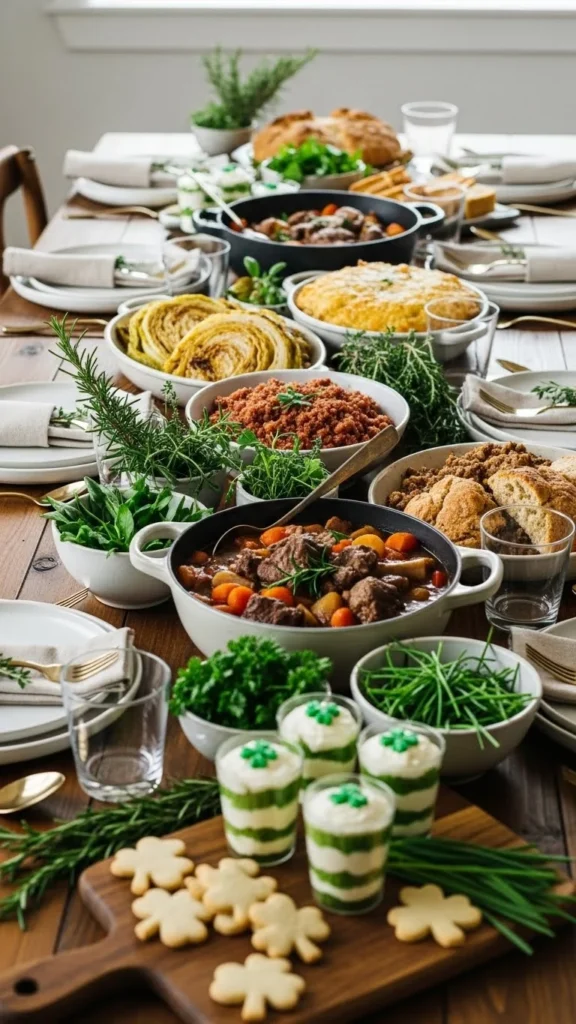
Planning a St Patrick’s Day event menu can feel tricky when you want it to feel festive without overspending or stressing guests. The good news is that smart menu planning is more about thoughtful choices than fancy ingredients. With simple foods, familiar flavors, and a few green-inspired touches, you can create a menu that feels fun, filling, and easy to manage. The ideas below focus on affordable ingredients, flexible portions, and DIY setups that work for home gatherings, school events, and community parties.
1. Build the Menu Around One Comfort Dish
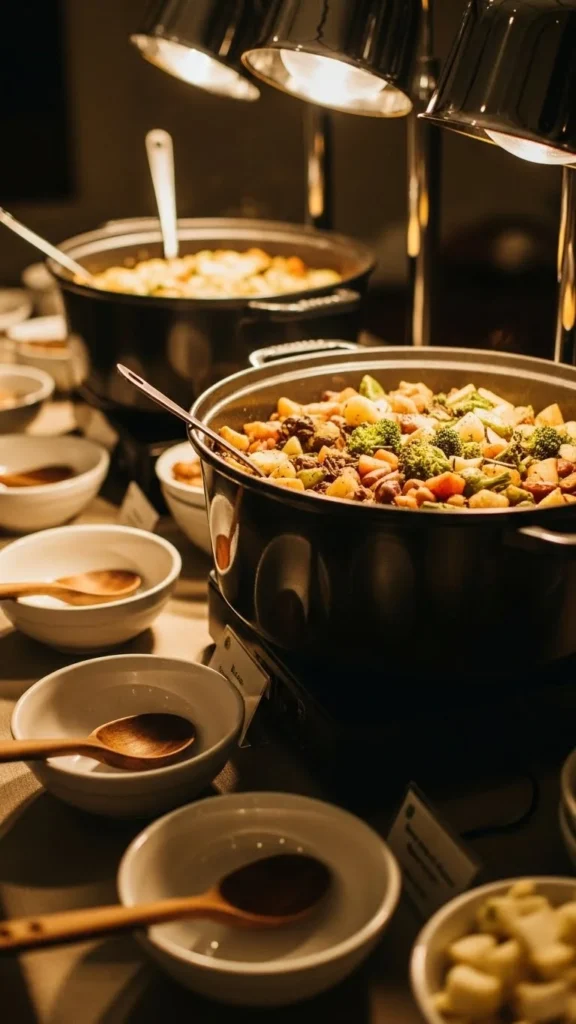
Start with one filling comfort dish and let everything else support it. A potato-based bake, veggie stew, or shepherd-style casserole works well. This approach keeps costs predictable and prep simple. When one dish carries the meal, guests feel satisfied even with smaller sides.
Use pantry staples like potatoes, onions, carrots, and beans. Cook the main dish ahead of time and reheat on event day. That saves time and reduces kitchen stress.
Pair it with bread, a simple salad, and one dessert. Avoid overloading the menu. Fewer dishes mean less shopping and less cleanup.
Label the main dish clearly so guests know what to expect. Familiar food helps everyone feel comfortable. This idea works for small gatherings and large crowds alike.
2. Use Potatoes in Three Simple Ways
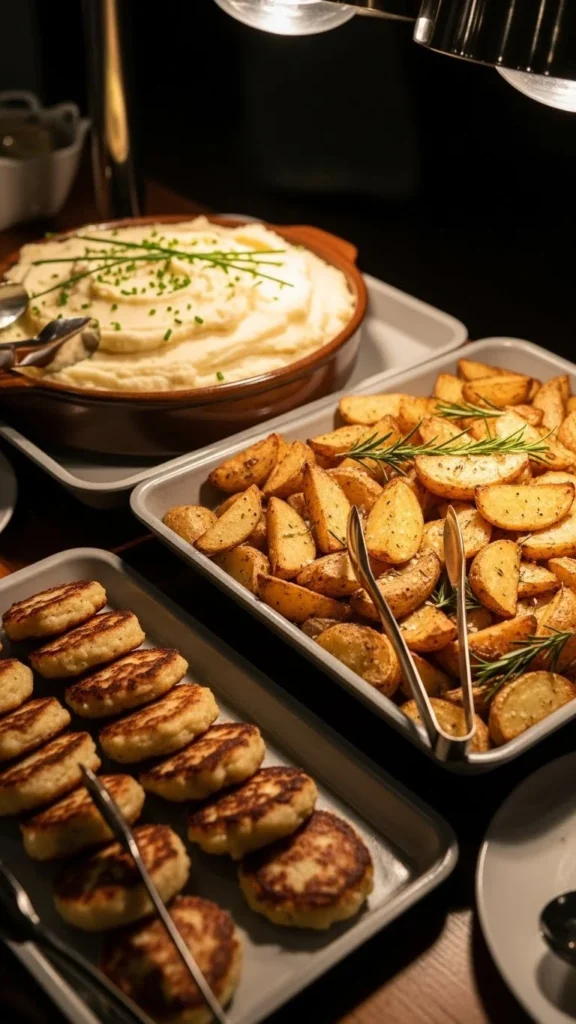
Potatoes are budget-friendly and filling. Using them in three different forms adds variety without increasing cost. Mashed, roasted, and pan-seared options give guests choice.
Prep mashed potatoes in advance and keep them warm in slow cookers. Roast wedges with oil and herbs shortly before serving. Small potato patties can be made from leftovers.
Offer simple toppings like chopped herbs or a mild sauce on the side. Guests can customize without extra effort from you.
This setup works well on buffet tables and stays appealing even as people come and go. It also keeps kids and adults happy with familiar flavors.
3. Plan a Green Veggie Side Station
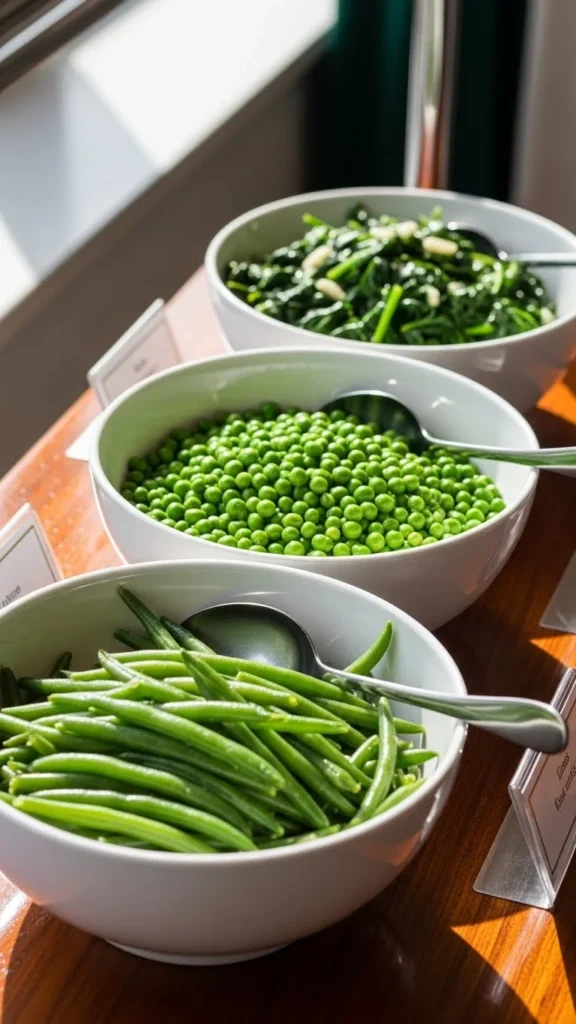
A green veggie station adds color and balances heavier dishes. Choose two or three simple vegetables. Steamed green beans, peas, or sautéed greens work well.
Cook veggies lightly so they keep their color. Season gently with oil and salt. Keep sauces optional to avoid overpowering flavors.
This station makes the menu feel thoughtful without adding stress. It also supports guests who prefer lighter plates.
Use identical bowls and simple labels for a clean look. This setup is affordable and easy to refill during the event.
4. Serve Bread as a Menu Anchor
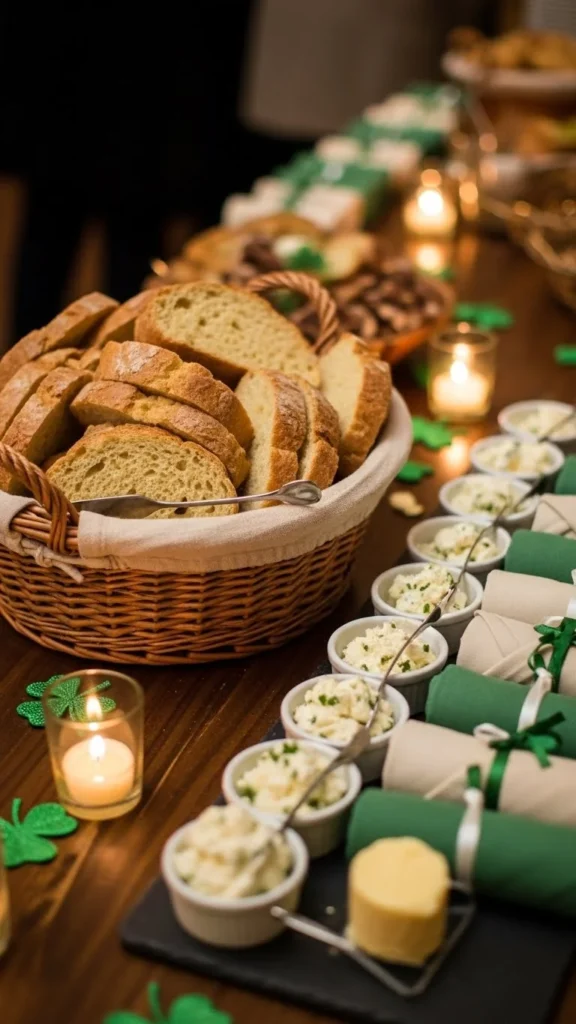
Bread helps stretch the menu and keeps guests full. Choose one hearty loaf style and slice it ahead of time.
Place bread near the main dish so guests naturally pair them. This reduces the need for extra sides.
Offer simple spreads like butter or herb-based options. Keep it basic to control costs.
Bread stations are easy to manage and rarely go to waste. Leftovers store well for later use.
5. Choose Desserts That Hold Their Shape
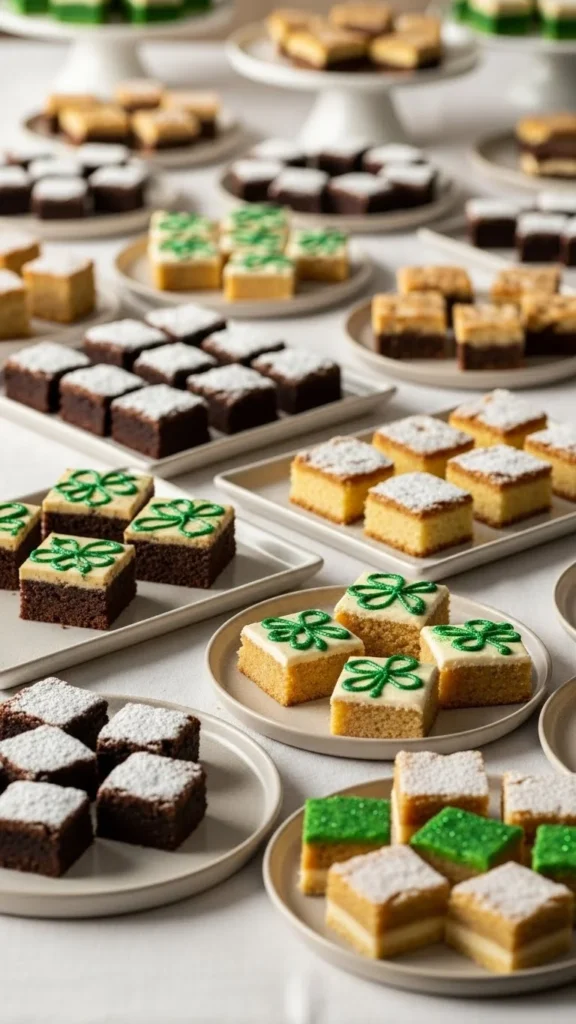
Pick desserts that travel and serve easily. Tray bakes, bars, or loaf slices work better than layered sweets.
Bake a day early and cut into even portions. This saves time and avoids last-minute stress.
Simple desserts feel familiar and comforting. Add a green accent through garnish or liners rather than flavor changes.
This approach keeps the dessert table neat and manageable throughout the event.
6. Use a One-Pot Soup as a Backup Option
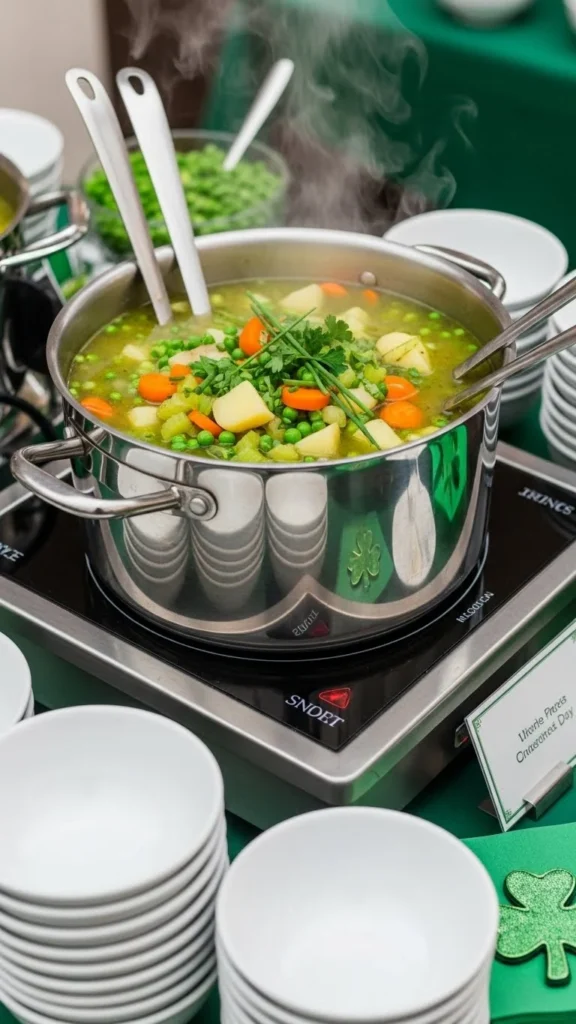
A soup option helps guests who want something lighter. It also stretches the menu.
Choose a vegetable-based soup with potatoes or lentils. Keep flavors simple and familiar.
Serve in small bowls so guests can add it alongside other foods. This reduces waste and prep.
Soup can be made ahead and reheated easily, making it ideal for busy hosts.
7. Create a Build-Your-Own Plate Flow
Arrange the buffet so guests move smoothly. Start with plates, then the main dish, then sides.
Clear flow prevents crowding and keeps food warm longer. It also helps guests build balanced plates.
This setup reduces confusion and speeds up serving time. That matters for larger events.
Use simple signs or table placement to guide movement without words on décor.
8. Offer One Warm and One Cool Side
Balance the menu by mixing temperatures. A warm veggie dish pairs well with a chilled salad.
Cool sides can be prepped earlier and stored easily. Warm sides add comfort.
This balance keeps plates interesting without adding extra dishes.
Guests appreciate variety even with a small menu.
9. Keep Flavors Familiar for All Ages
Stick with recognizable flavors. Avoid heavy spices or complex combinations.
Familiar food encourages guests to eat comfortably. That reduces waste.
You can still add a festive feel through presentation rather than flavor changes.
This works especially well for school or community events.
10. Use Herbs as Affordable Garnish
Fresh herbs add color and aroma without high cost. Parsley or chives go a long way.
Sprinkle lightly before serving. It refreshes the look of simple dishes.
Herbs help tie the green theme together naturally.
This small touch makes the menu feel thoughtful.
11. Prep Ingredients, Not Full Dishes
Prep chopping and measuring early. Cook closer to event time when possible.
This keeps food tasting better and reduces last-minute pressure.
Organized prep saves time and energy on event day.
It also helps if helpers step in.
12. Use Slow Cookers for Hands-Off Serving
Slow cookers keep food warm without attention. They free up oven space.
They work well for main dishes, soups, or sides.
Label each one clearly for guests.
This setup is practical and reliable.
13. Plan Portions With Serving Spoons
Use medium-sized spoons to guide portions naturally. This helps food last longer.
Avoid oversized utensils that lead to waste.
Guests still feel satisfied with balanced plates.
This small detail makes a big difference.
14. Choose Reusable Serving Ware
Reusable dishes feel sturdy and reduce trash.
Borrow from friends if needed. Mix neutral styles.
This keeps costs low and cleanup simple.
It also photographs well for memories.
15. Keep the Menu Mostly Make-Ahead
Make-ahead dishes save time. Focus on foods that reheat well.
This lets you enjoy the event too.
Stress stays low when food is ready early.
It also helps with timing issues.
16. Add a Simple Kids-Friendly Option
Offer one plain option for kids. Keep it simple and familiar.
This prevents picky eating issues.
Parents appreciate the thought.
It costs little and adds comfort.
17. Use Labels for Dietary Awareness
Simple labels help guests choose confidently.
Use short phrases like “vegetable-based” or “contains dairy.”
This avoids repeated questions.
It also supports inclusive hosting.
18. Limit the Menu to Reduce Waste
More dishes do not mean better hosting.
A focused menu keeps food moving.
Leftovers stay manageable.
This saves money and time.
19. Shop Seasonal Produce First
Seasonal produce costs less and tastes better.
Build dishes around what’s available.
This supports budget planning.
It also simplifies shopping.
20. Use Neutral Plates for Visual Balance
Neutral plates let food colors stand out.
They work with any theme.
Borrow or reuse what you have.
This keeps décor simple.
21. Offer Smaller Plates to Pace Eating
Smaller plates help food last longer.
Guests can return for seconds.
This reduces waste and mess.
It also supports portion balance.
22. Group Similar Foods Together
Group mains, sides, and desserts separately.
This keeps the table organized.
Guests move more smoothly.
Food stays tidy.
23. Plan One Simple Theme Ingredient
Choose one ingredient to repeat.
Potatoes or greens work well.
This ties the menu together.
It keeps planning focused.
24. Keep Drinks Simple and Separate
Offer water and simple infused options.
Keep drinks away from food.
This prevents spills.
It also keeps traffic flowing.
25. Set Up a Clear Cleanup Plan
Place bins and trays nearby.
Guests help naturally.
Cleanup stays quick.
You end the event calmly.
26. Test One Dish Ahead of Time
Test one main dish before the event.
Adjust seasoning and timing.
Confidence makes hosting easier.
The event day feels smoother.
Conclusion
Smart St Patrick’s Day menu planning is about simplicity, balance, and thoughtful preparation. By focusing on familiar foods, budget-friendly ingredients, and clear serving setups, you can host an event that feels welcoming and easy to manage. Choose a few strong dishes, plan ahead, and keep the menu flexible. Save these ideas and build a celebration menu that works for your space, your guests, and your schedule.

Leave a Reply