

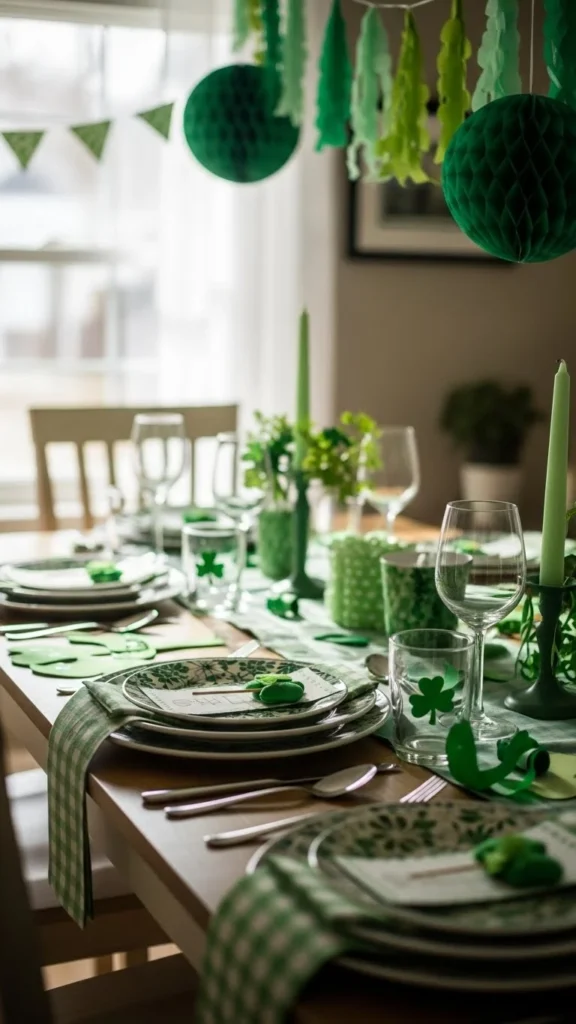
St Patrick’s Day parties shine when the layout feels welcoming, organized, and easy to enjoy. A smart setup guides guests naturally through food, games, and seating without confusion or clutter. The ideas below focus on simple arrangements, low-cost materials, and hands-on details you can assemble at home. Each layout helps create a festive flow while staying practical for real spaces like living rooms, backyards, and community halls.
Welcoming Entrance Table
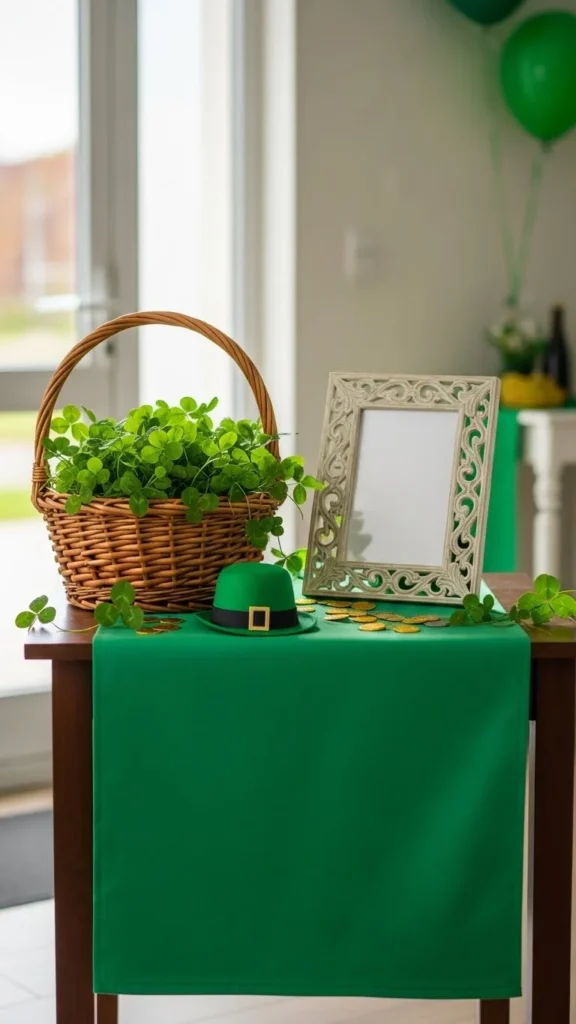
Start the party with a clear entry point that sets the mood right away. A small table near the door works well. Add a green table runner, a bowl of paper clovers, and a tray for party favors. This layout helps guests settle in without crowding. Keep items spaced so hands move easily. Use items you already own. A scarf can work as a runner. Mason jars can hold paper cutouts. If space is tight, use a wall shelf instead of a table. This spot also helps guide traffic so people don’t bunch up near the door. Keep decor light so coats and bags still have room. A mirror above the table reflects light and makes the area feel open. This simple setup creates order right from the start and helps guests feel comfortable stepping inside.
Family-Style Dining Table
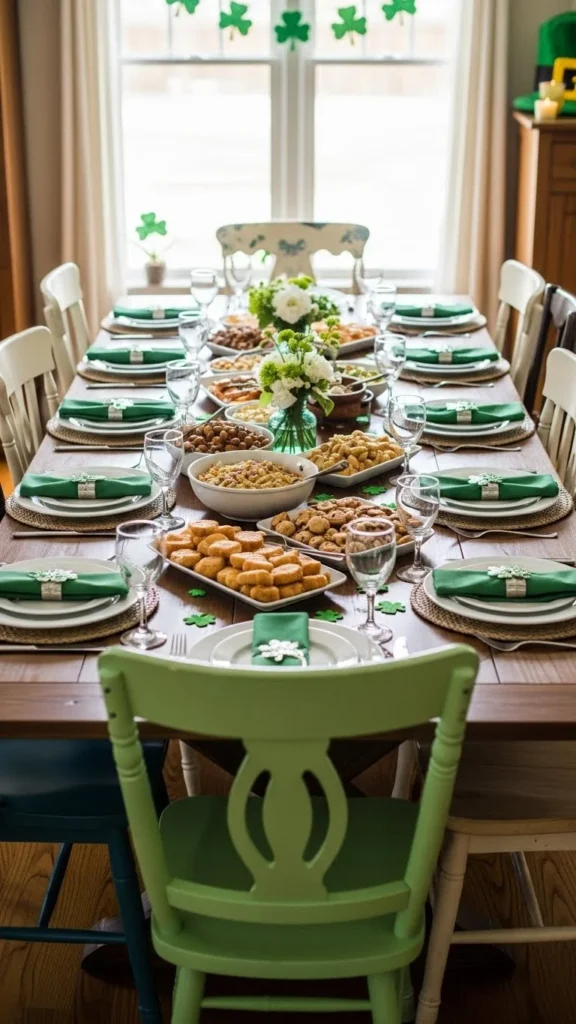
A long shared table brings people together naturally. Use mismatched chairs to keep the setup flexible. Lay down simple green napkins and small center accents spaced evenly. This layout works well for group meals and shared snacks. Keep the center low so guests can see each other. Small bowls, folded napkins, and greenery cut from the yard are enough. If you lack one long table, push smaller tables together and cover seams with a runner. This approach saves money and adapts to any room. Leave walking space at both ends so people can slide in and out without disruption. A family-style setup keeps conversation flowing and avoids the stiffness of assigned seating.
Self-Serve Snack Station
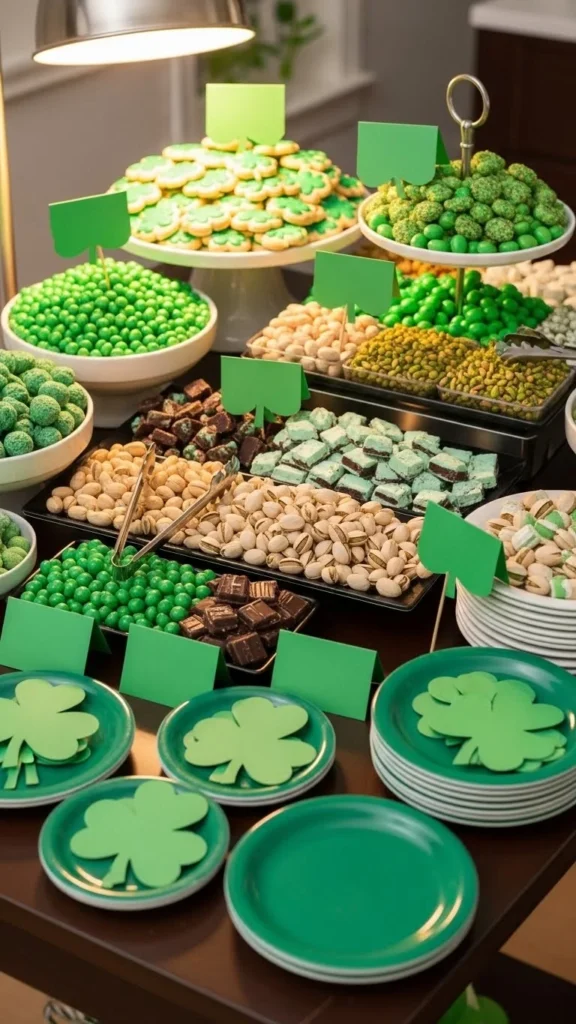
A dedicated snack station keeps traffic away from the main table. Use a side table or kitchen counter. Arrange items in a line so guests move smoothly from one end to the other. Tiered trays help save space and add height without clutter. Stick to sturdy plates and napkins placed at the start of the table. This layout cuts down on spills and crowding. Use trays, cutting boards, and bowls you already have. Vary heights using books under cloths if needed. Leave small gaps between items so hands don’t bump. A clear flow helps guests grab food quickly and return to social areas with ease.
Cozy Conversation Corner
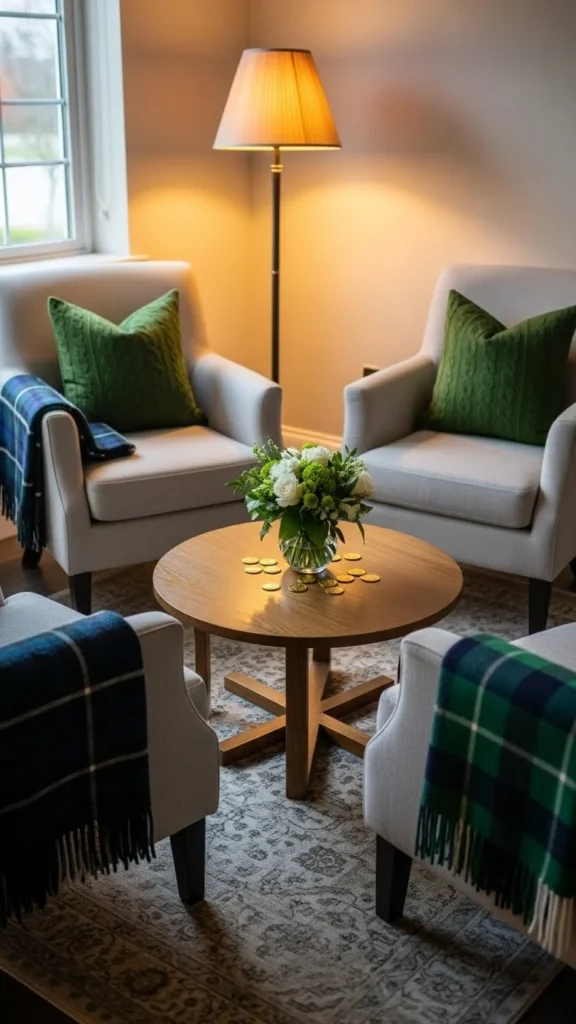
Not every guest wants to stand the whole time. A conversation corner gives people a place to relax. Arrange chairs in a loose circle or half circle. Add a few green pillows or throws for comfort. This setup encourages small group chats without noise from the main area. Use furniture you already own. Even dining chairs work fine. Place a small table in the center for cups or plates. Keep walkways open so people can join or leave easily. This layout works well in living rooms or covered patios and helps balance energy across the space.
Wall-Side Buffet Line
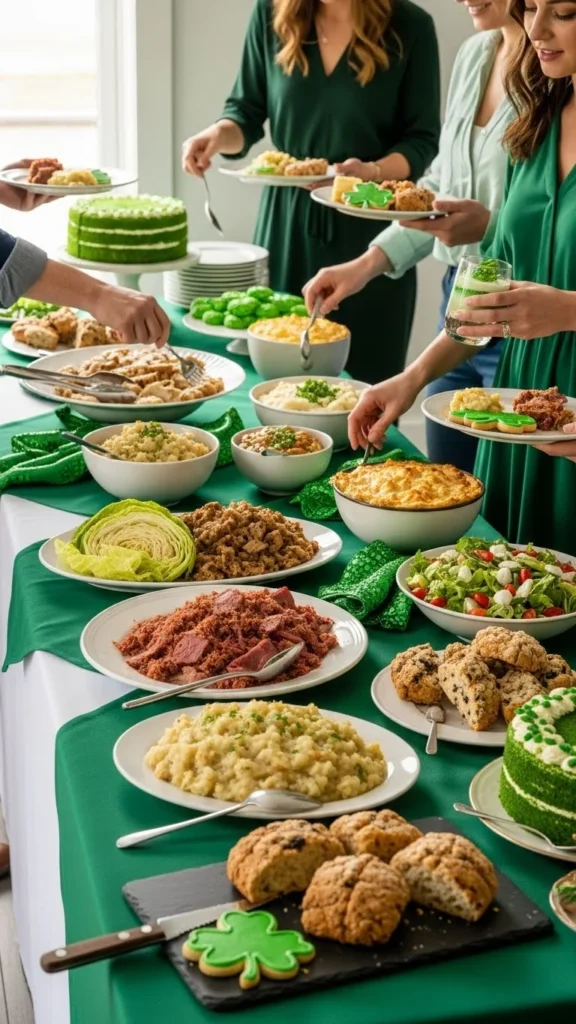
Placing the buffet against a wall keeps the center of the room open. Arrange dishes in order so guests move in one direction. Start with plates, then food, then napkins. This setup reduces backtracking and confusion. Use painters tape under the cloth to mark spacing if helpful. It keeps dishes from drifting. Borrow extra serving spoons from neighbors if needed. A wall-side buffet is easy to manage and works in narrow rooms where space matters most.
Kid-Friendly Craft Table
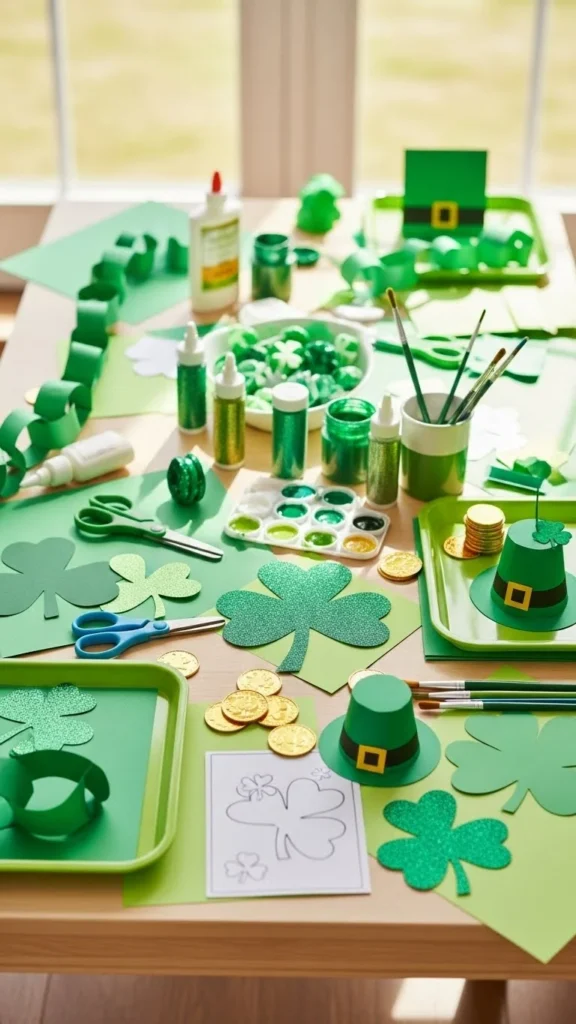
A craft table keeps younger guests busy and happy. Use a low table or floor mat. Set out paper shapes, crayons, and stickers in small bins. Space items so kids don’t crowd each other. Cover the surface with kraft paper for quick cleanup. This layout helps avoid mess spreading into other areas. Keep the table slightly away from food zones. Simple activities work best and cost little. Paper chains and clover cutouts are easy and engaging. This setup gives parents a break while kids stay focused.
Simple Dessert Display
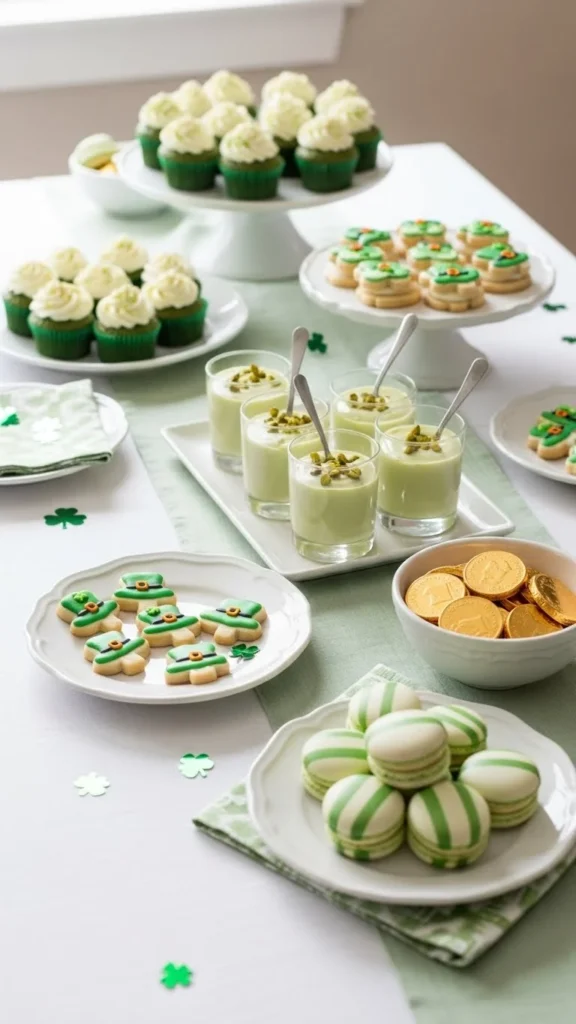
A dessert table works best when it stays uncluttered. Choose a neutral cloth and add green accents sparingly. Use cake stands or upside-down bowls to vary height. Place plates at the start so guests don’t reach across treats. This layout feels organized and easy to use. You don’t need special stands. Stack sturdy boxes under cloths to lift items. Keep portions small so the table stays tidy longer. A clean dessert layout makes the space feel calm even during busy moments.
Backyard Gathering Setup
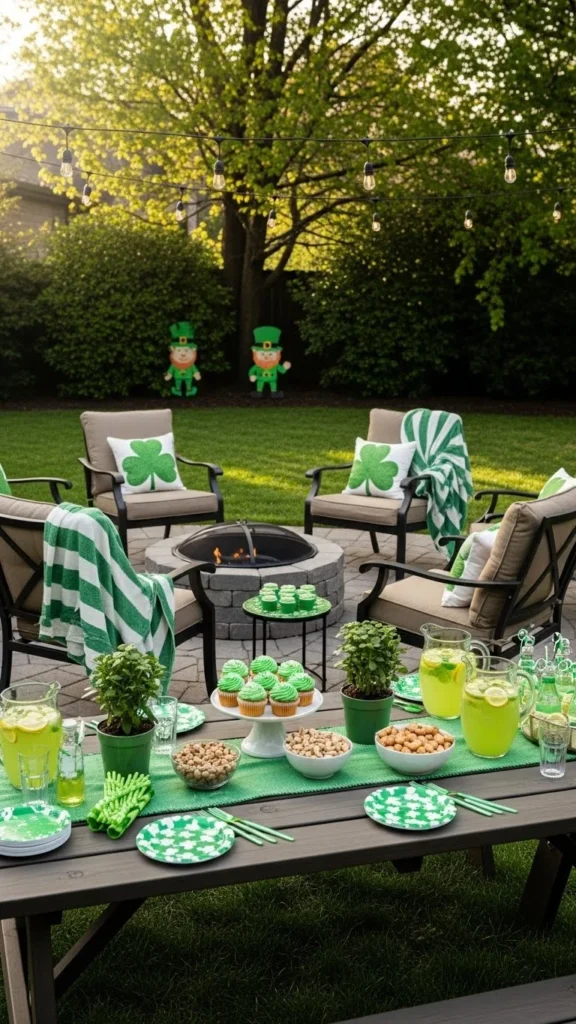
If weather allows, use outdoor space to spread things out. Group chairs in small clusters rather than rows. Add simple green touches like table covers or paper lanterns. This layout keeps movement easy and avoids crowding indoors. Use extension cords safely along edges. Keep food inside to avoid pests, while seating stays outside. This balance works well for relaxed gatherings and gives guests room to breathe.
Refreshment Station Without Bottlenecks
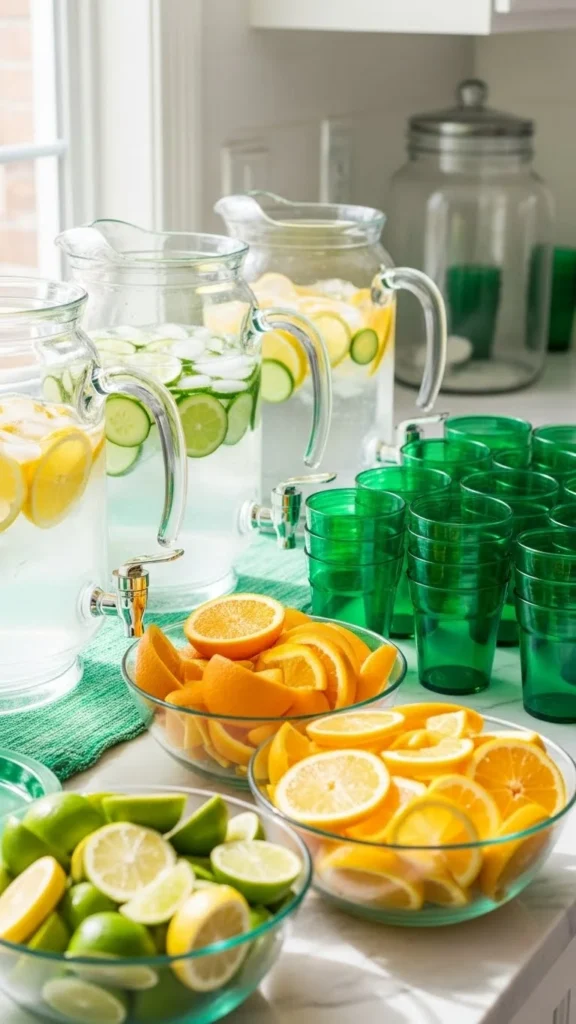
Create a separate spot for water and simple drinks. Use two pitchers so guests don’t wait. Place cups at both ends if space allows. This layout keeps people moving and reduces spills. Add citrus slices or herbs for color using items from the fridge. Keep towels nearby for quick cleanup. A dedicated station helps the main food area stay clear and calm.
Casual Photo Corner
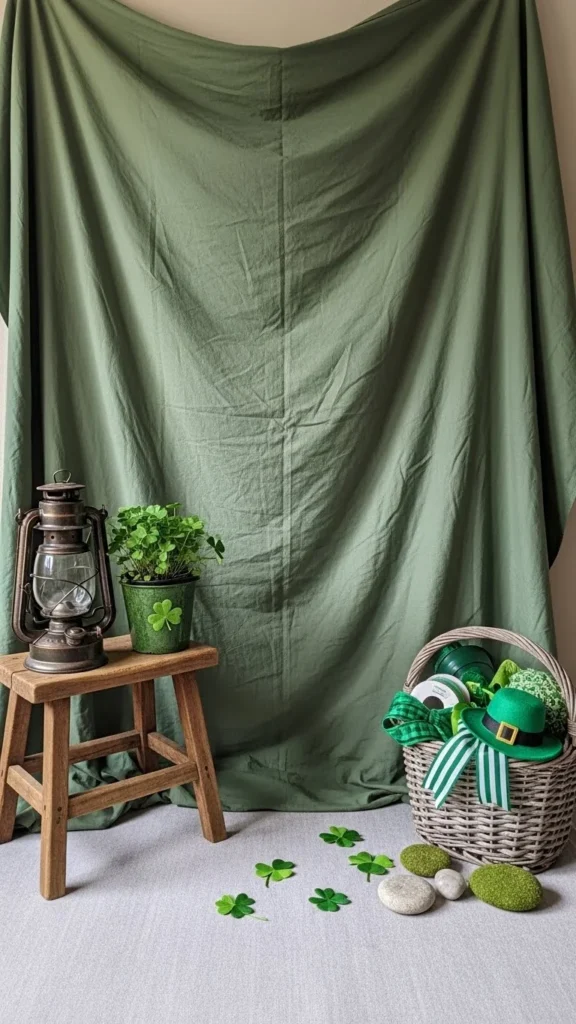
A photo corner adds fun without taking much space. Hang a green fabric or sheet as a backdrop. Place a small basket of props nearby. Keep the area well lit using a window or lamp. This layout lets guests take photos quickly without blocking walkways. Use removable hooks so setup and takedown stay easy. Simple props made from paper keep costs low and storage simple.
Tabletop Game Zone
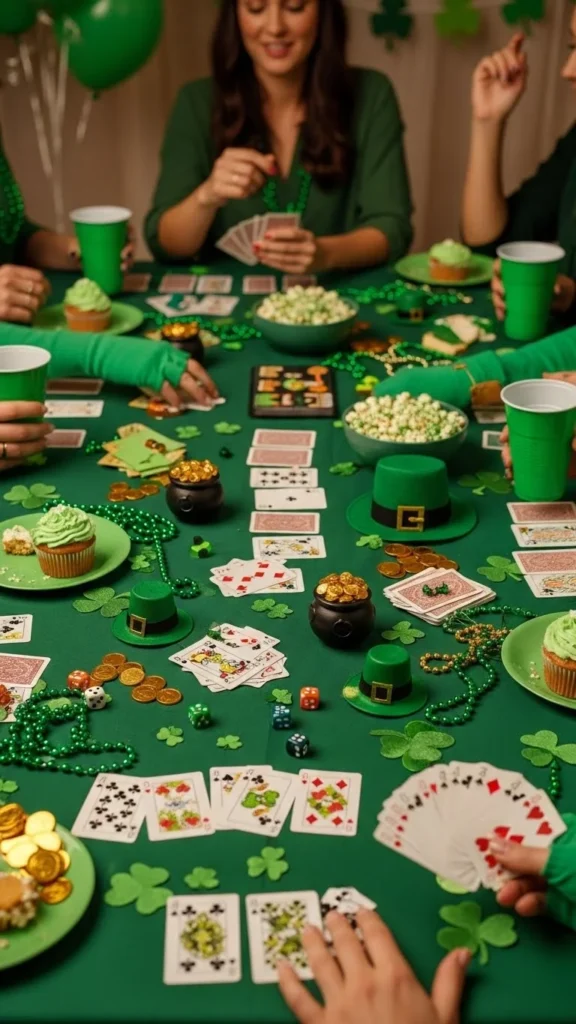
Designate one table for games to avoid mixing items with food. Choose compact games that fit easily. Arrange chairs so people can step away without disruption. This layout keeps play organized and prevents lost pieces. Use a storage box under the table for quick resets. A game zone adds structure while staying relaxed and easy to manage.
Open Mingling Space
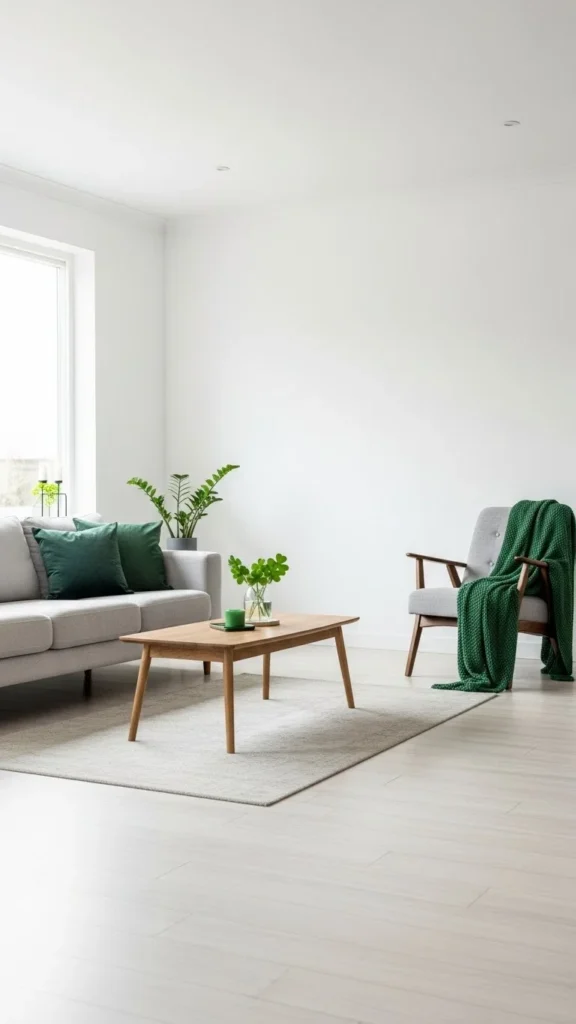
Leaving one area mostly open helps the party breathe. Clear extra furniture and keep decor along edges. This layout gives guests room to move, chat, and shift groups easily. Even small rooms benefit from one open zone. Store unused chairs in another room. An open space balances busier areas like food tables and seating clusters.
Potluck-Friendly Layout
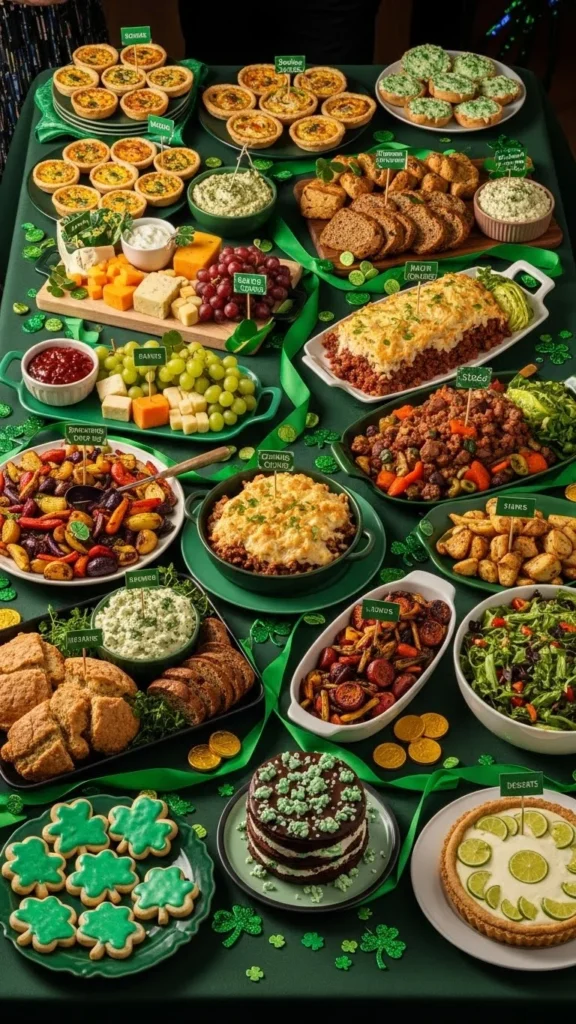
If guests bring food, group dishes by type. Place warm items together and snacks in another area. This layout avoids confusion and crowding. Leave space behind the table so hosts can adjust items as needed. Use sticky notes under dishes to remember what goes where. A clear potluck setup keeps the flow smooth and stress low.
Guided Foot Traffic Flow
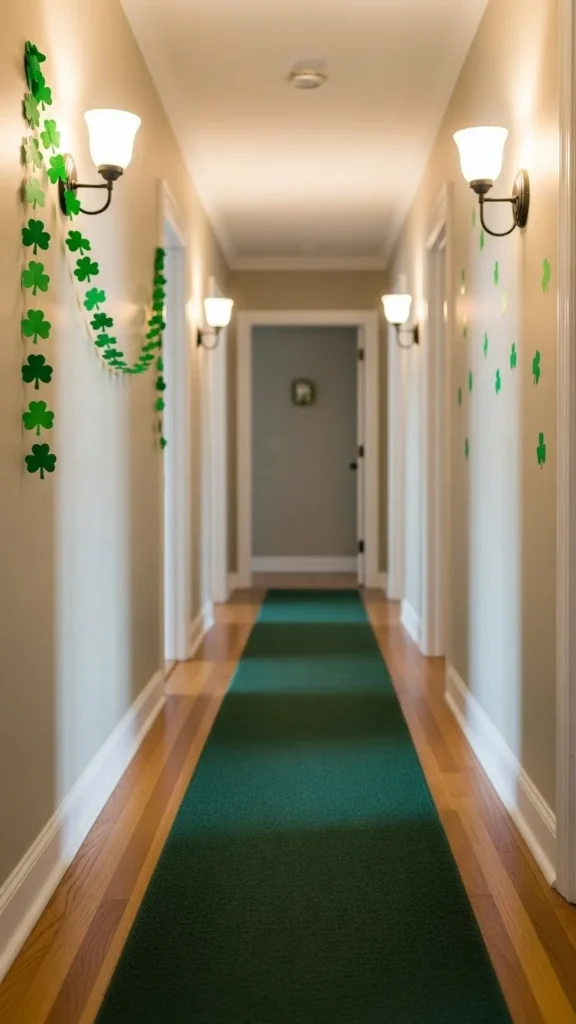
Use furniture placement to guide movement. Angle tables slightly to suggest direction. Keep hallways clear and decorate walls instead. This layout reduces bottlenecks without signs. Small touches like rugs or plants can hint where to walk. Thoughtful flow makes the space feel larger and easier to enjoy.
Floor Cushion Seating
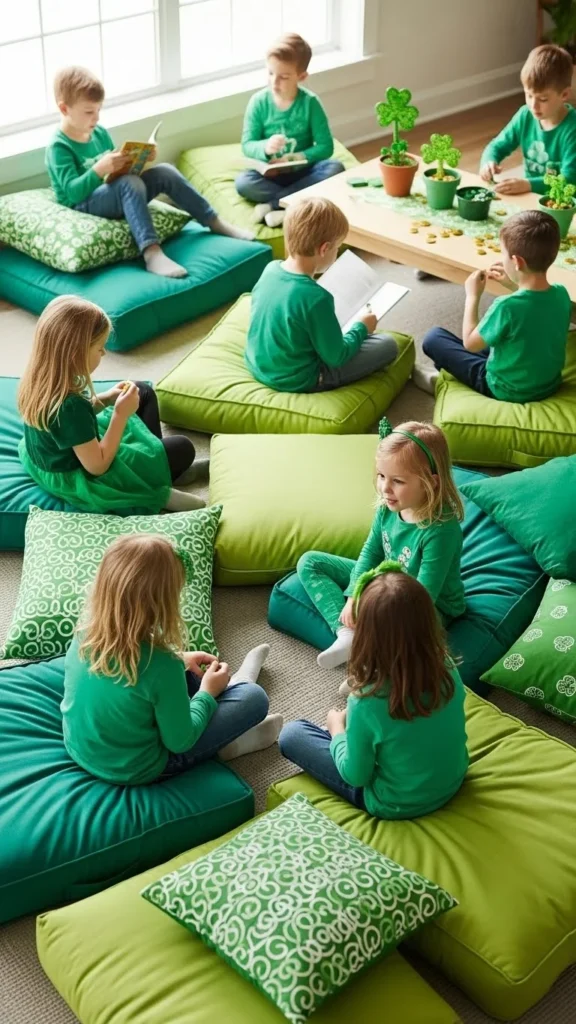
Floor cushions offer flexible seating for casual guests. Stack them in a corner and let people move them as needed. This layout adapts quickly and costs little. Use pillows from bedrooms or borrowed items. It works well near conversation areas or game zones and adds comfort without bulky furniture.
Organized Coat Drop Zone
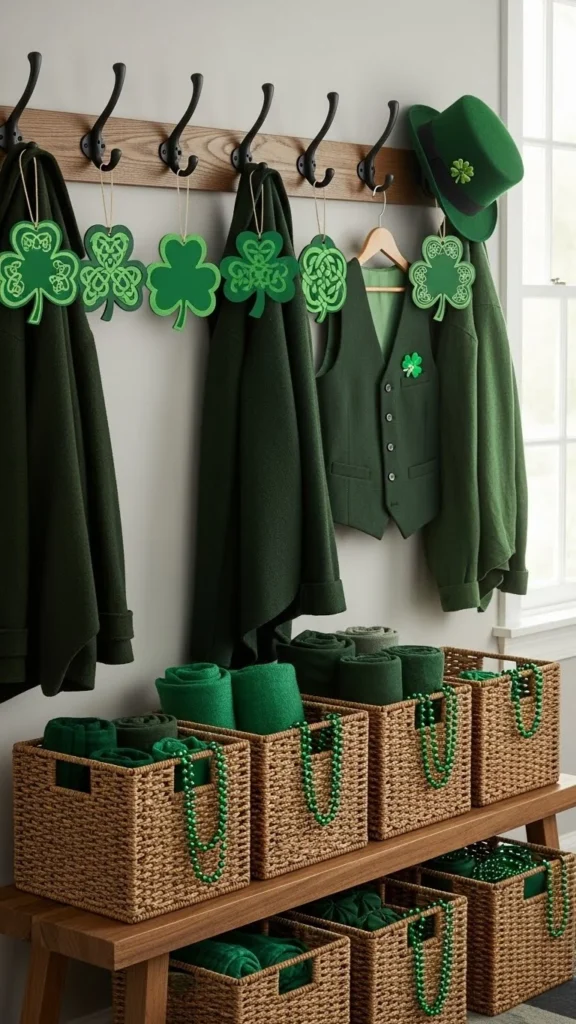
A clear coat area keeps living spaces tidy. Use hooks, a rack, or even chairs along a wall. Add baskets for bags. This layout prevents piles from forming. Keep it near the entrance so guests don’t wander. Simple organization saves time and keeps the party looking neat.
Soft Ambient Lighting Plan
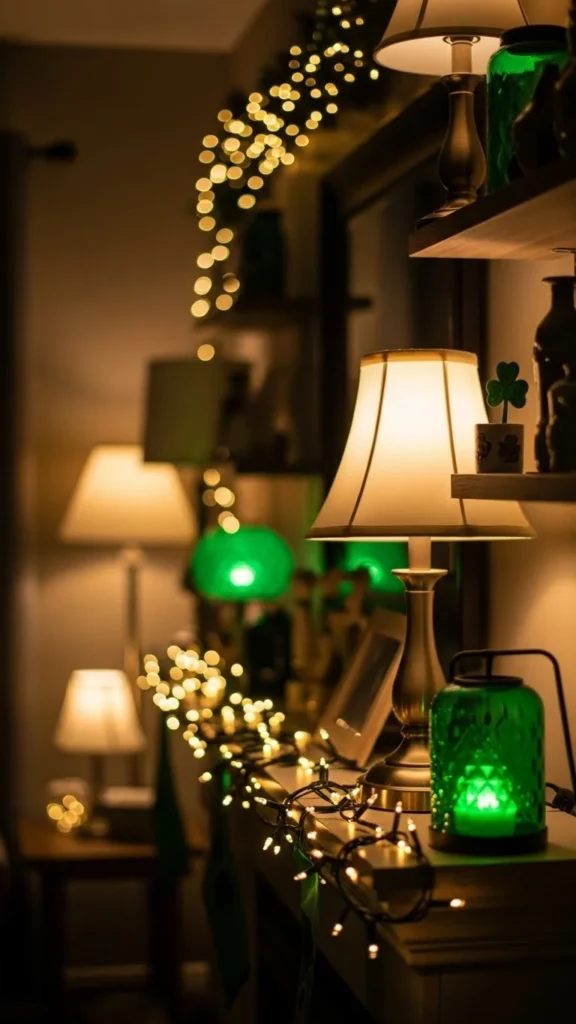
Lighting shapes how the space feels. Use lamps instead of overhead lights when possible. Add string lights along shelves or windows. This layout creates warmth without glare. Use bulbs you already have. Balanced lighting helps guests relax and makes decor stand out naturally.
Secondary Dessert Spot
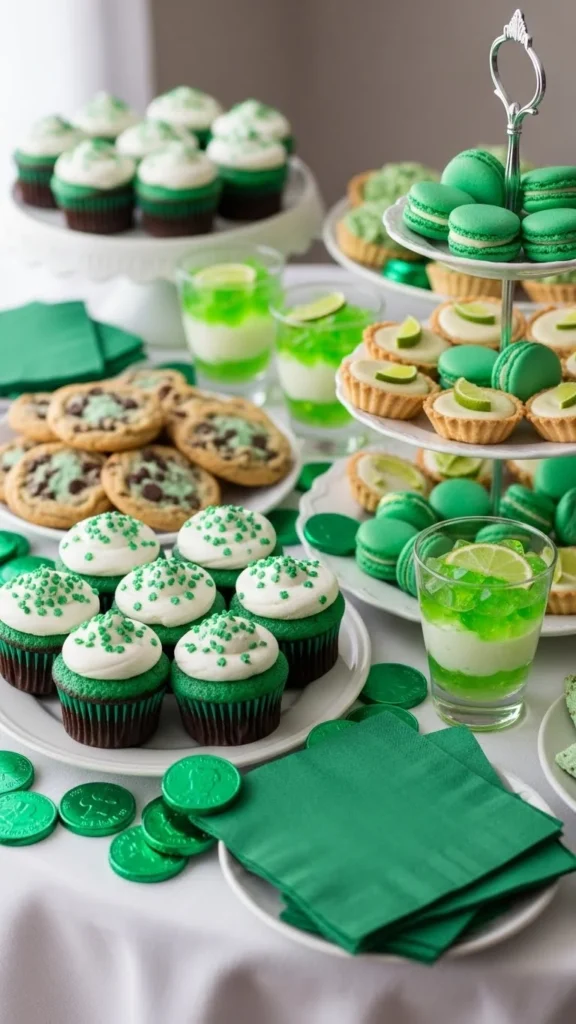
If desserts run long, add a second small table. This layout spreads traffic and keeps the main area calm. Use a side table or tray on a counter. Rotate items as needed. A backup spot helps when guest count grows beyond plan.
Mixed-Age Seating Area
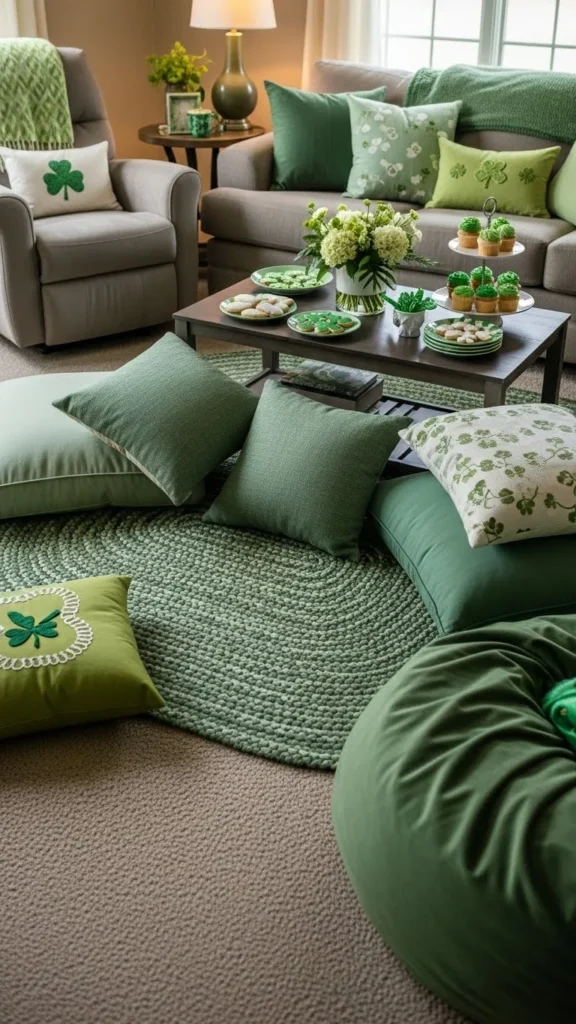
Place seating that works for all ages in one zone. Sofas, chairs, and stools together allow choice. This layout keeps families together and avoids splitting groups. Add small tables nearby. Mixed seating helps everyone settle comfortably.
Quiet Break Corner
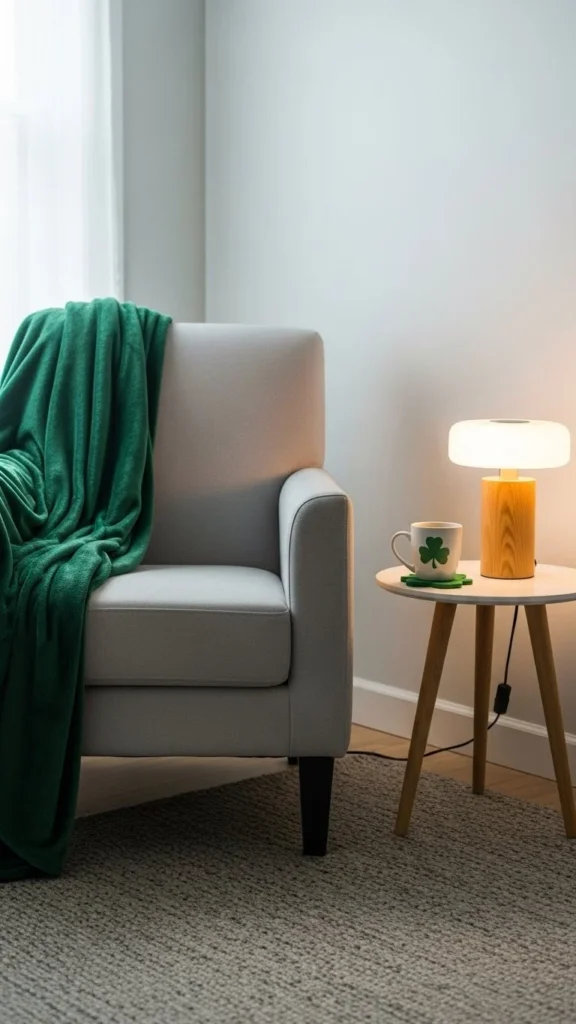
Some guests appreciate a calm spot. Set up one chair with a lamp away from music or games. This layout gives space to recharge. It works well for longer gatherings and shows care for different comfort levels.
Discreet Cleanup Stations
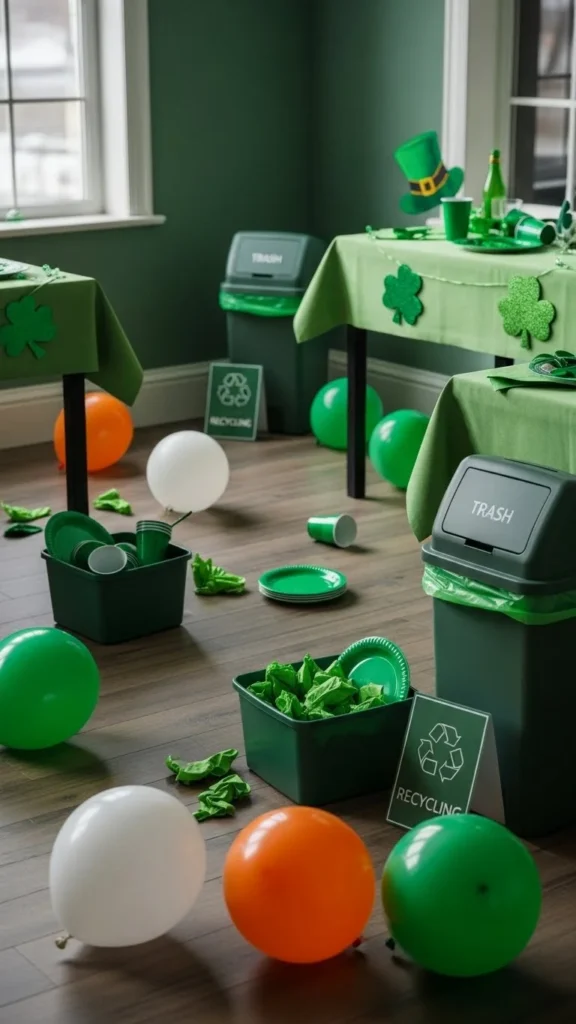
Place bins where guests pass naturally. Cover them or tuck them behind tables. This layout keeps surfaces clear without constant hosting. Use labeled color liners if helpful. Easy cleanup keeps the party running smoothly.
Central Closing Space
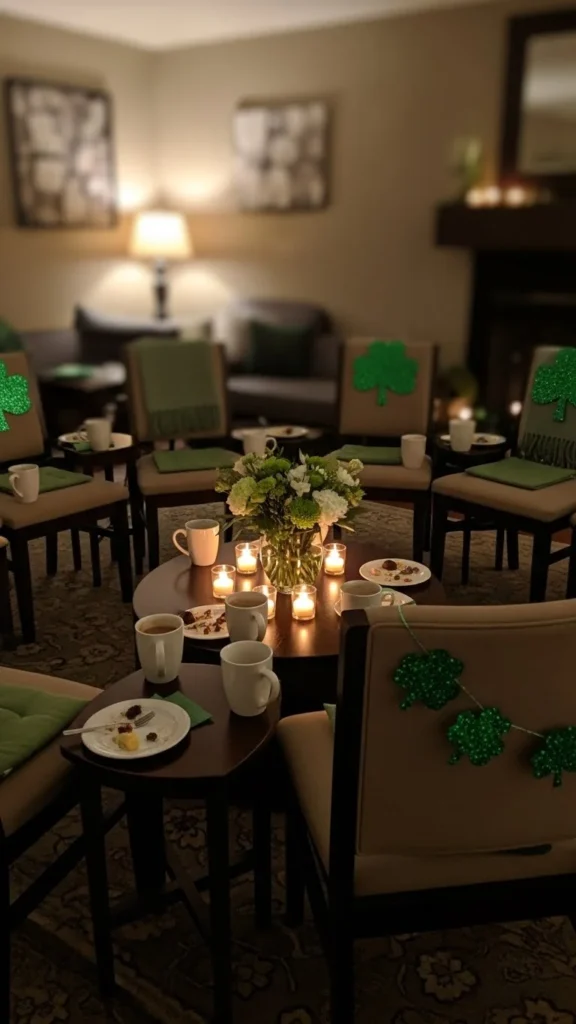
Toward the end, draw seating closer in one area. This layout helps bring energy together for final chats. Move chairs from open zones and create a relaxed circle. A simple shift helps wrap the event naturally.
Conclusion
A great St Patrick’s Day party layout comes from thoughtful spacing, simple materials, and clear flow. These ideas show how small adjustments can make guests feel comfortable and engaged without heavy spending. Choose the layouts that fit your space, mix a few together, and focus on ease of movement. Save your favorites, adapt them to your home, and enjoy hosting a celebration that feels relaxed, organized, and welcoming from start to finish.
Leave a Reply